
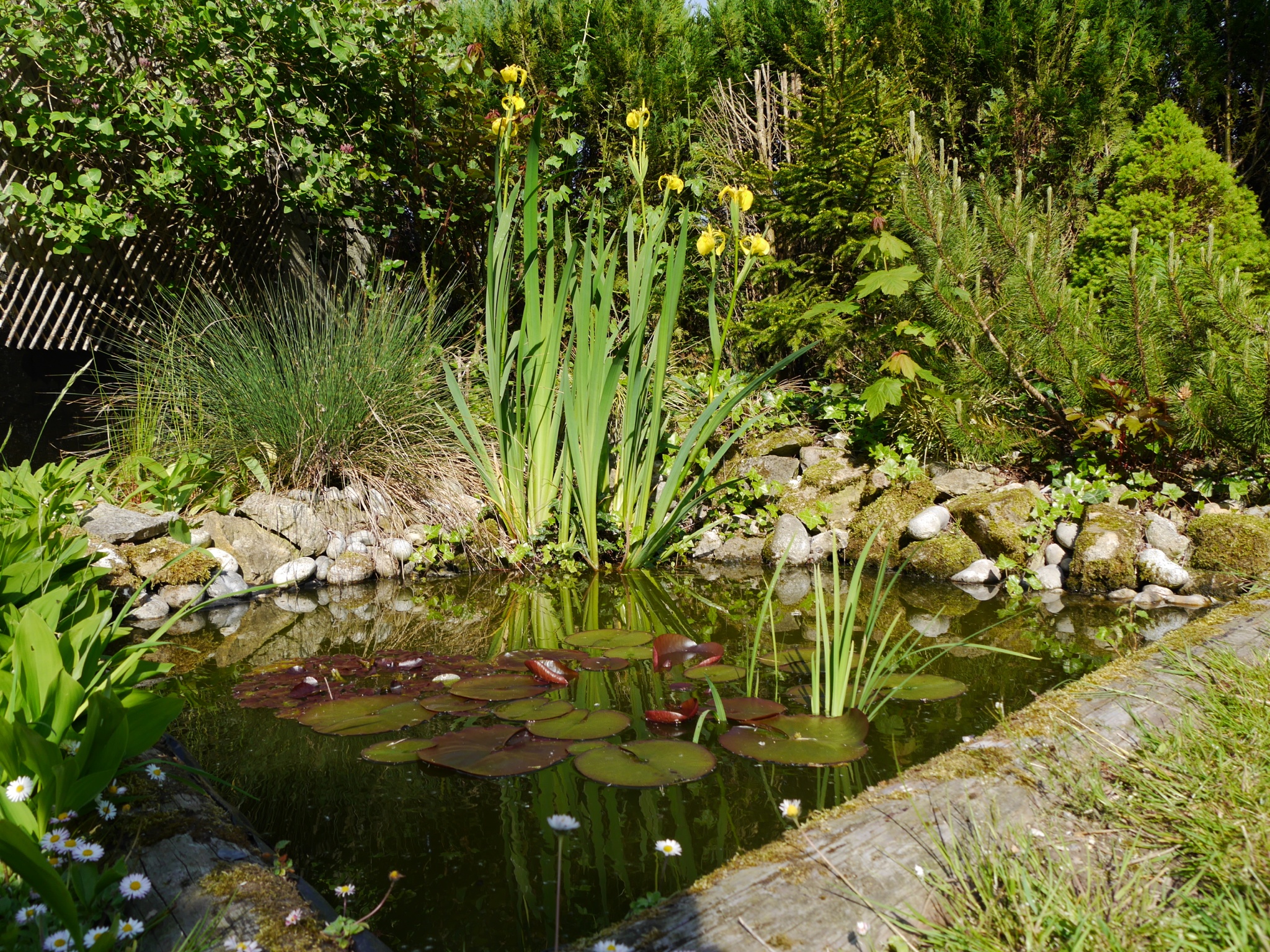
 Tomorrow is the 7th May and time for our May Gardeners’ Club meeting. This month we have Ken Turner coming to talk about pond construction, planting and maintenance. As more and more of us have garden ponds, this looks like it will be a great talk. For many, the spring has meant that the pond is beginning to clear from its winter algae, (should there be any?), and is coming back to life. Iris are in flower, pond lilies are coming back to life and the pond is readying itself for the summer. Tomorrow evening it will be interesting to hear what Ken has to say that may help us with our own ponds.

Another interesting and informative talk from Ken Turner. Yesterday evening we learned a lot about pond construction – have you ever thought about the complexities of installing a pre-formed pond? It is not quite as easy as you might think! Did you know that a concrete constructed pond will emit lime which will be very harmful to plants and wildlife? What about how to protect a butyl liner from puncture when you fill the pond?
Moving onto planting, there were more interesting facts to learn. For example, if you want to make your own aquatic compost, simply layer turf, (turned upside down), with cow manure, leave for a couple of years and then when you break it up you’ll have perfect aquatic compost – alternatively, but it from the garden centre! When you plant a young water lily in the pond, it won’t have the strength to push its leaves all the way to the surface, so you need to gradually lower it as it establishes in the pond. Every few years you will need to lift and divide water plants in the same way as you do other plants. Water lilies, irises and other plants are prolific growers in the pond environment.
Moving to the edge of the pond, there is an opportunity to plant bog plants. More irises, but primulas and other plants that like to have their feet in soggy compost but not submerged in water. One of the most important things is to ensure that the pond has different levels to support the planting of different plants that need differing growing conditions. If you want to attract wildlife, don’t forget to ensure that there is a way in which the wildlife can get into and out of the pond.
Don’t forget the oxygenating plants. Without oxygen nothing will survive in the pond. Oxygenating plants will provide essential oxygen through their own osmosis. Be careful though, there are some oxygenating plants that are not native to Britain or Europe that are now banned because of their proliferation and ability to squeeze out other plants. Garden centres and nurseries should no longer be selling them, but the RHS will have full details of those that are now banned.
Finally, there was maintenance. Don’t forget that the pond will get sludge in the bottom over time. Every few years it is a good idea to drain it down and clean it. This can be done by draining down and cleaning out whilst taking the opportunity to lift and divide plants, but there are now devices that one can buy to carry out the cleaning without draining down, although Ken wasn’t too sure how effective these might be. There are various treatments to deal with different conditions such as the water becoming green, blanket weed and others. Beware, however, of sellers who will sell you inappropriate sized solutions, (such as small bunches of barley straw to get rid of blanket weed when it will be completely ineffective).
A thoroughly interesting talk with some interesting photographs of both good examples of ponds and some truly dreadful installations that should never have been built!